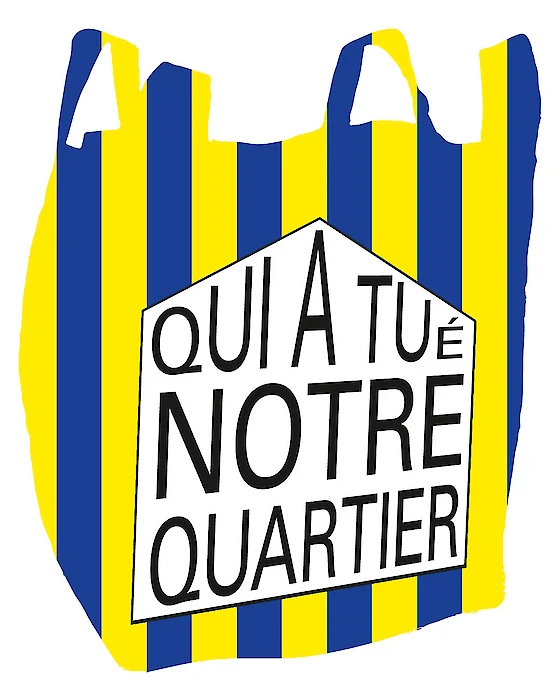
Qui a tué notre quartier: Stalingrad - Lemonnier
Un whodunit en trois actes ...
nouvelle date !
REGARDER L’HISTOIRE DES TRANSFORMATIONS URBAINES DE BRUXELLES peut donner l’impression d’observer une poupée sans cesse découpée, déplacée puis recousue : des fragments éventrés, réagencés, sacrifiés, tandis que des familles et des activités sont délogées au gré des projets de démolition. Mais qui a tué notre quartier ? La question résonne comme une accusation — parce qu’elle en est une. À Bruxelles, nos quartiers populaires sont trop souvent considérés comme des espaces disponibles pour les projets et les imaginaires des autres : des visions conçues d’en haut et imposées au nom de l’urgence, de la nécessité ou du progrès, tandis que celles et ceux qui y vivent sont invités à s’adapter, à céder la place, voire à disparaître.
À TRAVERS UNE SÉRIE DE CONFÉRENCES-DÉBATS, DÉRIVE VOUS INVITE à mener l’enquête et à envisager la disparition d’un quartier non pas comme un événement isolé, mais comme un processus. Un processus fait de plans, de démolitions, de permis en suspens, de retards, de récits d’experts et de formes de violence urbaine qui s’inscrivent dans le quotidien. L’ambition est claire : remettre au centre les quartiers directement concernés par les grands projets territoriaux, et ancrer la réflexion dans les lieux mêmes où ces transformations prennent forme.
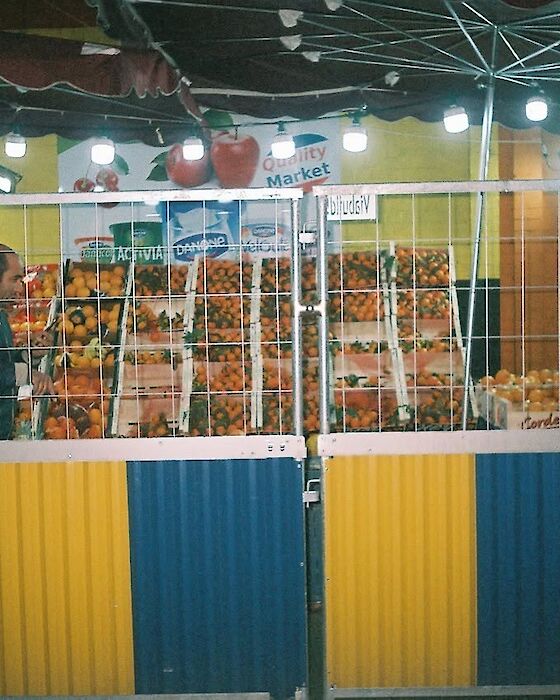
ET AUJOURD’HUI, OÙ COMMENCER AILLEURS QU’À Stalingrad-Lemonnier, confronté au « chantier du siècle » : la construction du métro 3.
18:30 doors
19:00 conversation starts
20:30 conversation ends
22:00 bar closes
ACT 1 — CRIME SCENE (JEU 24.09.2026)
Tout commence comme un polar que nous connaissons déjà : un quartier central, historique, retrouvé mort sur les lieux. Un corps qui appelle une enquête. Et si les habitant·es, les commerçant·es et les usager·ères se réunissaient pour désigner un coupable ? Quelles traces suivraient-iels ? Et pourraient-iels remonter jusqu’au système qui se cache derrière cette disparition ? Dans cette enquête quasi-fédérale sur le « meurtre » d’un quartier — menée en présence de ses victimes — nous donnons la parole aux personnes qui ont contribué à façonner le quartier, à construire son identité et sa réputation, et qui rassemblent aujourd’hui les preuves de sa disparition programmée.
Speakers & interventions:
Chérine Layachi (moderation)
"knows the ins and outs of the struggle in this territory; the organisations, the alliances and the dead ends..."
Alice Camerlinckx (inhabitant)
"a former resident who tried to document and archive neighborhood life as evidence of..."
Siham Lachiri (inhabitant)
"if the neighborhood had eyes it would be... a window with a view on Palais du Midi"
Marion Alecian (mobility staff member at ARAU)
"knows how to translate complex urban dossiers and the bureaucratic whirlwind like the back of her hand..."
ACT 2 — GRIEF (JEU 15.10.2026)
Une ville ne se transforme jamais sans laisser de pertes derrière elle. Certaines formes de violence urbaine sont immédiatement visibles : expulsions, expropriations, démolitions. D’autres sont plus silencieuses et disparaissent peu à peu : les liens, les souvenirs, les pratiques et les significations qui se sont construits au fil du temps autour d’un lieu. Cet acte s’intéresse à ce qui disparaît lorsqu’un quartier perd progressivement sa vie et son identité — et aux futurs possibles qui disparaissent avec lui. Nous poursuivons notre enquête sur la « mort » programmée d’un quartier, en nous intéressant notamment aux dynamiques de gentrification commerciale. Notre regard dépasse le projet actuel de métro pour se tourner vers une histoire plus longue : celle des expropriations qui ont façonné les abords de la gare du Midi. Comment la pression, les déplacements forcés et la perte d’une identité de quartier se renforcent-ils mutuellement ? Les mêmes mécanismes se répètent-ils, projet après projet ? Et comment rendre visibles des formes de violence qui s’installent lentement, jusqu’à devenir presque invisibles ?
Speakers & interventions:
Chérine Layachi (moderation)
"living above her parents’ shop on boulevard Lemmonnier; the struggle to defend the neighborhood identity hits close to home, which she takes on through multiple roles ..."
Mae de Monchy (moderation)
"a critical geographer who collects small traces – files, forms, testimonies – that might one day become clues that help interpret who …"
Abdellali Hajjat (GERME Université Libre de Bruxelles)
"passing the street daily, he was in a great position to map the movements of shops and analyse urban transformation from a sociological angle, attuned to discrimination"
Nour Eddine Layachi (association de commerçants Stalingrad-Lemonnier)
"as founder of a local shopkeepers’ union he knows the daily grind of the commerces and can shed light on how to represent and defend their fate one storefront at a time"
Gwennaël Brees (historian & filmmaker)
"inhabitant of a neighbourhood notorious for resisting expropriations and evictions… and like the Marolles itself, a rumoured documenter of local urban struggles in Brussels"
ACT 3 — RESURRECTION/ SURVIVAL (MAR 03.11.2026)
Que reste-t-il une fois les dégâts commis ? Que peut-on encore défendre, réparer ou réinventer ? Dans ce dernier acte, nous passons du deuil à l’action. Non pas dans l’illusion de pouvoir faire revenir le passé, mais avec une question en tête : quelles formes de vie urbaine pouvons-nous encore construire, protéger et défendre aujourd’hui ? L’avenir du Palais du Midi se joue actuellement entre les mains de la Ville de Bruxelles, de la STIB et de la Région de Bruxelles-Capitale. Les projets envisagés menacent de faire disparaître un lieu social essentiel du quartier : un espace pour les jeunes, les écoles, les commerces locaux et les associations sportives. Parallèlement, l’avenir du projet de mobilité reste incertain. Le projet justifie-t-il réellement les dommages matériels et immatériels qu’il risque d’engendrer ? Et que signifie décider de l’avenir du Palais du Midi sans véritable espace pour la participation, la discussion et la contestation ? Dans ce dernier acte, nous mettons au centre le patrimoine social du Palais du Midi : les liens, les pratiques et les formes de vie collective qui existent déjà aujourd’hui entre ses murs. Nous nous demandons comment les personnes qui font vivre le lieu peuvent réellement prendre part aux décisions qui concernent son avenir. Nous interrogeons le manque de transparence et la manière dont les principaux·ales usager·ères du Palais du Midi risquent de perdre leur place. Mais nous voulons aussi regarder au-delà de la perte. Que pouvons-nous encore défendre ? Comment nous organiser ? Et comment imaginer ensemble un autre avenir pour ce lieu — un avenir pour lequel nous pouvons ensuite nous mobiliser et nous battre ?
Speakers & interventions coming soon-ish <3
ground floor, PMR-accessible space, accessible toilet on +1 via the elevator accompanied by someone with a building access badge (ask at the door or the bar)