Sophie K. Rosa - Keynote on heartbreak
A talk I gave during the OUT of LOVE festival </3.
I felt superstitious when asked to speak on heartbreak. It crossed my mind that the invitation might portend a heartbreak of my own. It hasn’t - at least, not in the most obvious sense: I’ve not had a break up or a bereavement in the intervening time. I wonder though, if my superstition was correct, in another way: reflecting on heartbreak has certainly brought me closer to it. There is so much to be heartbroken about and it is important that we feel it so.
I understand that Beursschouwburg is “breaking up” with its building because of upcoming renovations, meaning the organisation will need to move to a temporary home. ‘Breaking up’ were the words used to tell me this - which got me thinking about the term in a new way. ‘Breaking up’ as in falling apart, as in fragmentation: the walls being broken down; structures being dismantled to make way for something new.
Generally, ‘breaking up’ is used to describe ending a relationship. It tends to mean a departure, abandonment or separation in relation to the other - a person, usually. When used this way, the ‘breaking up’ happens between two subjects - but usually, each person, as a singular subject, is ‘broken up’ by it, too. The heart is henceforth fractured - or is it split off from the body entirely? Is heartbreak what happens when the heart is broken off to symbolise the whole? It’s literal as well as symbolic because you can die from a broken heart: the diagnosis is Takotsubo, or broken heart syndrome. The first modern medically-described cases were reported in Japan in the 1990s; people were rushed to hospital because, after traumatic losses, their hearts had become unable to pump blood adequately.
We cannot escape loss, even as it pursues us internally, through our bodies, with their symptoms and aging. But capitalist culture is fuelled by lies, including about this. Contemporary life under the spell of the profit motive is ostensibly aversive to loss, littered as it is with false promises of infallibility and immortality. These promises have perhaps, until recently, most obviously played out through advertising. Since advertising’s earliest days, products have been sold on the basis of accumulation: more profit via the promise of more beauty, more sex, more happiness, more love, more life. Consumerism beguiles with fleeting illusions of the eternal good life.
Nowadays, advertising moves through us differently. We are, of course, more bombarded by it than ever - but most of it is subliminal now, even more manipulative, threaded throughout the technological fabric of our lives, where it is easy to miss that you are being sold something. Where it is easy to miss that you, too, are being sold.
Social media feeds are apparently bespoke, but there are common threads - not least the idea that life, your life, need not be marked by loss. If you just purchase this plastic item, assume this apparently therapeutic knowledge, adopt this hate-based ideology, avoid these ‘red flags’ in other people, your life and your relationships could finally be wholly satisfying, wholly secure, complete! And generative AI is redoubling the lie of infinite life. As users look to it for soulless mothering, they receive limitless responses assuring them that everything will indeed be okay. AI companies are even promoting a total escape from grief per se. So-called griefbots allow a user to continue communicating with an algorithm mimicking a dead loved one. A founder of one such company, Justin Harrisson of ‘You, Only Virtual’ has said he hopes that in the future no one should have to suffer grief at all.
Written into this culture - or arguably what it feeds on - is ‘death denial’, a concept expanded upon by cultural anthropologist Ernest Becker in his 1973 book ‘The Denial of Death’. The idea is that human consciousness cannot bear the reality of death, so we go to great lengths, structuring our lives to ignore or evade its inevitability. Freud, the founder of psychoanalysis, agreed, suggesting that “in the unconscious every one of us is convinced of [our] immortality.”
More often than outright denial, though, I’d say it’s death disavowal: we know we are going to die, even if we don’t like to say it - though we can even say it, like I just did! - but we also, in another sense, don’t know, not really. As the writer Susan Sontag put it: “One can’t look steadily at death any more than one can stare at the sun.” And yet, this formulation - of death disavowal - is not universal. It might be understood as psychosocial reality primarily of Western, imperialist societies; many indigenous cultures, especially pre-colonisation, have different relationships to death, ones where death is looked in the eye, where loss is named and worked through collectively.
The Dagara people of Burkina Faso, for example, hold regular grief rituals because they believe grief left untended is a danger not only to the individual, but to the collective. Often, in the West - whether it be due to custom, character, culture or coercion - people seem to do the opposite: to retreat in grief, to isolate. There is a pressure everywhere to resume business-as-usual after heartbreak - as if, really, what is lost didn’t exist. Or as if, really, we didn’t exist.
But the idea that capitalist culture is intrinsically allergic to loss is its own kind of disavowal. Capitalism is built upon destruction, structured around violence and death. In its logic, the absolute value of the profit motive, above life itself, rules - whereas people, non-human animals, land, ecologies are positioned as acceptable, even desirable, sacrifices. The philosopher and political theorist Achille Mbembe calls this the “necropolitical”, a system involving “death-worlds”: “forms of social existence in which vast populations are subjected to conditions of life conferring upon them the status of the living dead.” Racialised populations are, everywhere, on the frontline - of labour exploitation, war, climate crisis, ecological destruction. As we speak, AI data centres being built across the world are subjecting already-marginalised local populations in drought prone areas to water shortages and pollution. What does it mean not to be heartbroken in the world, by the world? What does it mean to be heartbroken when others are not heartbroken and then feel doubly heartbroken by this?
The disavowal of our own degradation and death, then, is also disavowal of others’. The same disavowal that permits people to look away from the realities of genocide, animal agriculture, the climate crisis; to forget what we are condoning in our silence, to disconnect the sausages from the suffering, to chat away to generative AI as it bleeds the planet dry. It’s the same emotional posture involved in talking about enjoying the hot weather in London recently - politely, with just-discernible fear - as we melted into unfit infrastructure, during the hottest May days on record. We cannot constantly stare at the heartbreak, but omitting it from speech - perhaps because we have said or heard it named so many times before, perhaps because it hurts too much - is a common complicity. We cannot stop naming the violence for fear of repeating ourselves or of stating the obvious or for causing pain; surely, this is how tacit consent and indifference grows: through submerging the heartbreak in silence.
All around, there is loss. But how do we discern between loss we must and must not resist? Between loss we do not want, exactly, but that we might decide to or be forced to accept? I am thinking, here, of ordinary-yet-heartbreaking losses like death and separation and other kinds of life-crossroads. A certain strain of billionaire-led reactionary thinking has opted to resist personal bodily demise - through so-called life extension technologies, for instance - alongside accepting and stoking global crises that threaten billions of lives imminently, as well as the entire planet. Doing the opposite of billionaires might be a good metric for discernment about loss. Equally, even an ordinary life, especially in the Global North, not involving any or much political action against unacceptable losses, surely involves a good deal of nihilism. How else could we get on with things?
Whether we are accepting, embracing or resisting loss though, we need to find a way to live with it. Meaning, we need to be alive with it, to be alive to it. We cannot do any accepting, embracing or resisting without first being. This might involve stopping, opening up, listening, surrendering; it might involve falling apart, breaking down, fragmenting. One of the many reasons why I appreciate psychoanalysis is this kind of thing; a good analyst will not allow the patient to disavow loss for long, will support them to gradually break down their defences where they are preventing a reckoning with loss. This can be difficult work - not the kind of therapy that necessarily always leaves you feeling ‘better’, exactly. Because what we don’t want to know about loss, we don’t want to know. We might not even acknowledge that there is a loss to be known. In the unconscious, we tell ourselves all kinds of convenient lies. The unconscious is full of absences.
In The Sexual Politics of Meat, the feminist-vegan scholar and activist Carol J. Adams develops the literary concept of the ‘absent referent’ to describe a structure that enables and links violence against women and animals. Adams writes:
“Behind every meal of meat is an absence: the death of the animal whose place the meat takes… Once the existence of meat is disconnected from the existence of an animal who was killed to become that ‘meat,’ meat becomes unanchored by its original referent (the animal), becoming instead a free-floating image, used often to reflect women’s status as well as animals’. Animals are the absent referents in the act of meat eating; they also become the absent referent in images of women butchered, fragmented, or consumable… Through the structure of the absent referent, patriarchal values become institutionalized. Just as dead bodies are absent from our language about meat, in descriptions of cultural violence women are also often the absent referent.”
What we refuse to see, what we refuse to feel, we cannot relate to with a sense of agency. This can be a personal issue - one we all inhabit - but it is also encouraged socially. We are systemically isolated from heartbreak, lured into complacency, passivity, anaesthetised against all the odds, offered a false sense of individual agency to substitute political agency. The wellness industry, for instance, markets personal ‘nervous system regulation’ whilst the world’s ecological system is on fire. An attractive substitute, perhaps: if you cannot heal the world, heal yourself! What this idea misses, of course, is that these projects are mutually dependent.
Working as a psychotherapist as someone who believes that, ultimately, healing happens collectively, in relationship with other living beings, is complicated. Indeed, even as a psychoanalyst who ordinarily follows the patient‘s lead, I sometimes find myself asking the people I work with about their wider networks of support, because I know our work together will be futile in isolation. I don’t know what I think about the hypothetical will-there-still-be-therapy-after-the-revolution, but I do think that working-through unconscious defences in psychoanalysis, at best, is an example of the transformation that is possible through being with loss. I also believe that abstracting suffering from life’s material conditions is a fallacy.
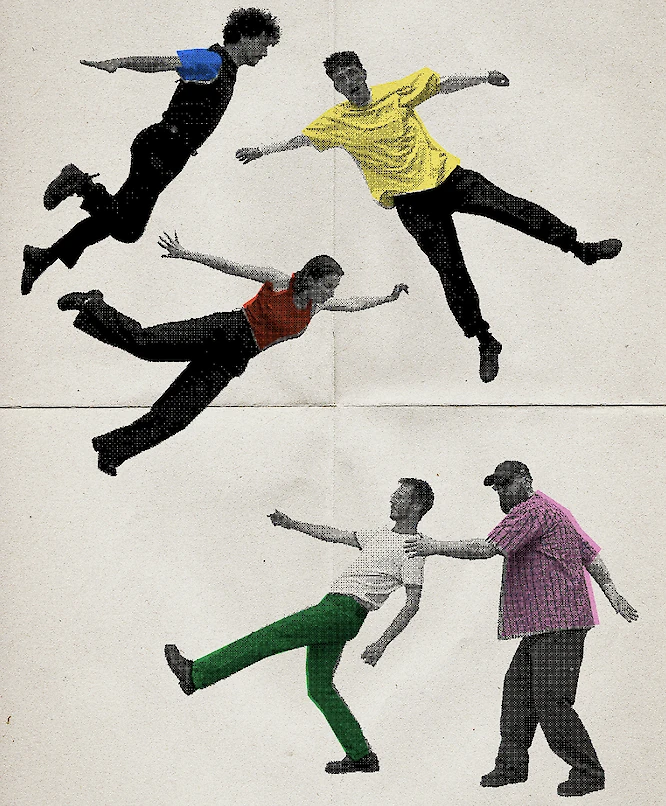
Our psychic defences are there to protect us, though they might also cause us problems. The psychoanalyst Donald Winnicott - most known for his concept of the ‘good-enough mother’ - noticed that some of his patients had a persistent “fear of breakdown”. In time, he realised that this fear was connected to a historic, unthinkable agony that was not truly experienced at the time. The “fear of breakdown,” he concludes, “is the fear of a breakdown that has already been experienced.” That is, what might seem like a fear of something in the present is, at root, a fear of an “unthinkable state of affairs” in the patient’s very early life - one which could not be felt at the time because of an inadequate holding environment. One especially evocative “agony” he catalogues is a baby’s fear of “falling forever”.
Though Winnicott’s “fear of breakdown” is referring to patients with particular symptoms, the idea is useful more broadly, too. We are all somewhat afraid of experiencing agony, or heartbreak - and ‘breakdown’ might be a good descriptor for what we commonly fear happening, should we allow ourselves to experience too much emotional pain. We all have early and historic agonies which shape how we experience the present. This might be true collectively, too; it could be said that everything we fear happening, fear feeling, has, in a sense, already happened - we have just been unable to truly register it. For many in the Global North, for instance, it can be difficult to be alive to the agony of the climate crisis - in Winnicott’s terms, people struggle to be alive to this “unthinkable state of affairs” that not only signifies potential breakdown, but a breakdown that has already happened.
What allows a patient to work through this fear of breakdown, according to Winnicott, is the analyst providing the conditions in which the original agony can finally be experienced. With sufficient holding in the analytic relationship, the feared breakdown can actually be felt. This might be an approach to heartbreak; the idea that it connects to past agonies, and needs to be truly experienced in the present in order to bring aliveness - the capacity to act - back to the subject.
Winnicott’s ideas here are connected to the modern concept and ancient practice of grief tending, usually referring to a ritual that provides a container for grief to be experienced and worked through in connection to others. In both cases, a certain kind of falling apart is considered essential to coming back to a stable-enough sense of self, a self that can feel, can be in relationship with others, and can take action in the world. ‘Holding’ that allows for heartbreak is not something that can happen alone; holding ourselves together - as I am perhaps attempting as I lay my hand on my heart - is necessary at times but truly moving through agony requires falling apart together.
Which brings me back to Beursschouwburg, ‘breaking up’ with its home, for major renovations, in order to come back home later. In this, too, there is the breaking down that is necessary for transformation. Being alive to heartbreak, then, is not only enduring but experiencing its agony; not because a ‘fresh start’ is possible, but because rebuilding something better - new lives, new relationships, new worlds - can only happen if we metabolise what came before.
WRITTEN BY Sophie K. Rosa