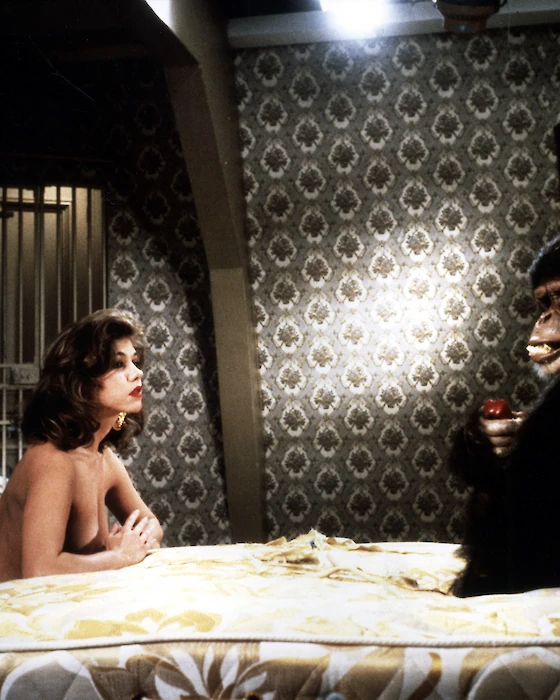
Nagisa Ōshima — Max mon amour
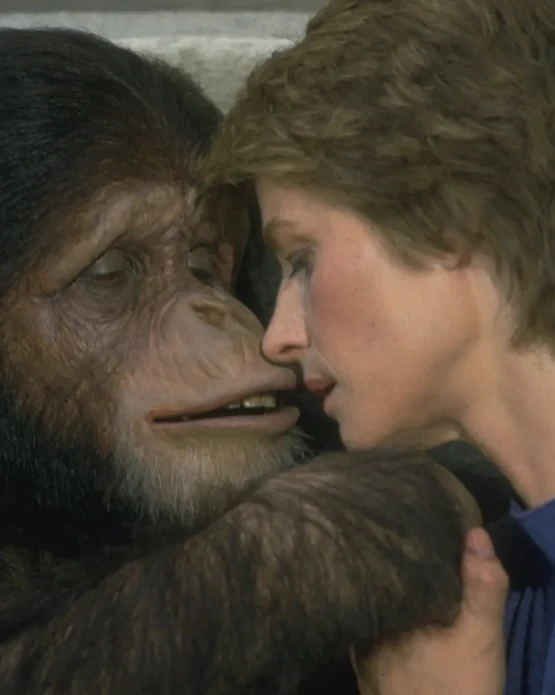
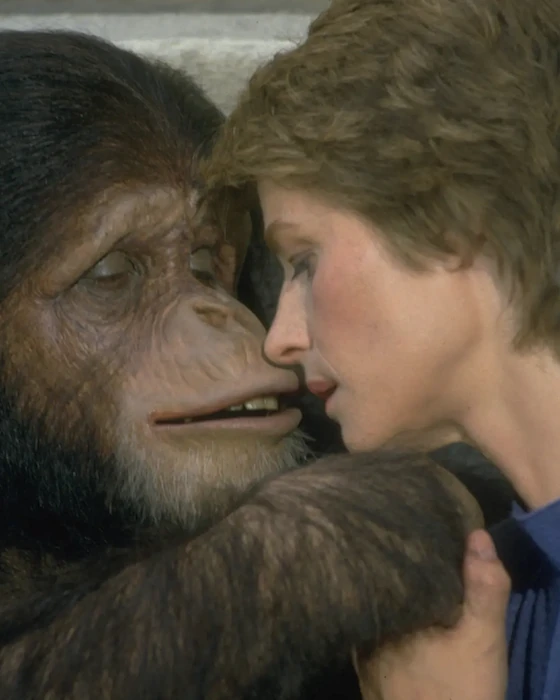
The wife of a British diplomat in Paris takes a chimpanzee as her lover.
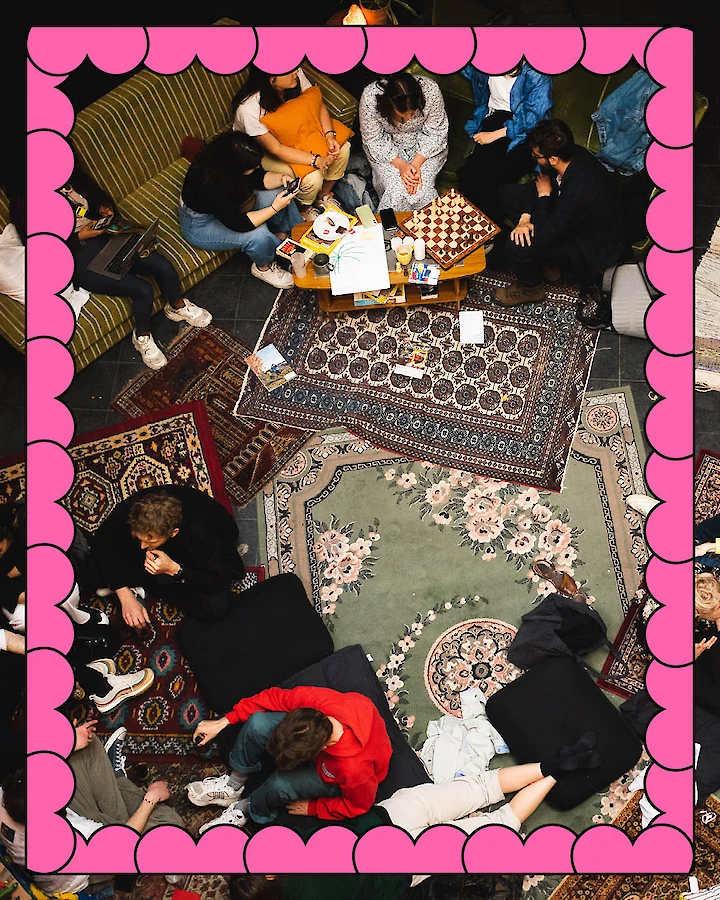
in case of rain we move indoors </3
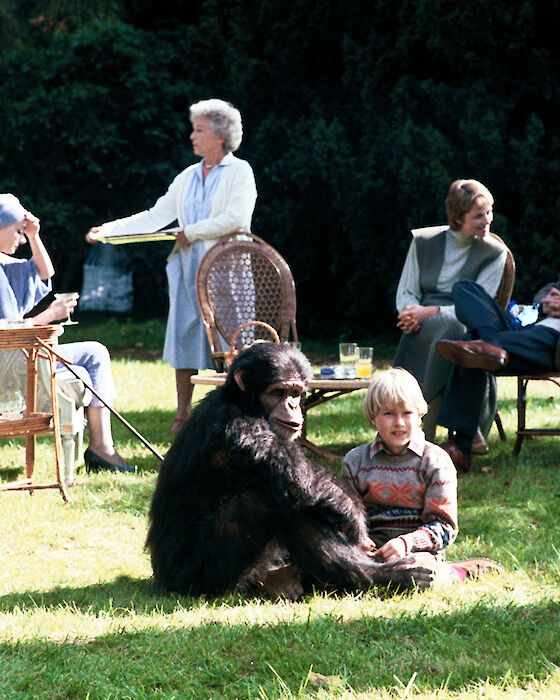
“Is love only possible between members of the same species? Or can a horse fall in love with a snake, or with a cherry tree?”, Peter wonders after his wife Margaret has taken her lover Max into their home. Peter and Margaret have an open relationship. The couple belong to the intellectual elite and, in all fairness, they cannot forbid one another anything. From their privileged position, they look down on the petty-bourgeois idea of monogamy. In their orderly marriage, love for another is possible. But the definition of ‘the other’ is now being pushed to the extreme. For Max is, in fact, a chimpanzee.
— Nina de Vroome in “Longing for the Other” for Sabzian (2017, article in NL)
about
“My hatred for Japanese cinema includes absolutely all of it.”
— Nagisa Ōshima
A leading figure of the Japanese Nuberu Bagu (Nouvelle Vague), Nagisa Ōshima was a radical filmmaker, writer, and left-wing activist, who tackled themes such as youthful rebellion, class and racial discrimination, and taboo sexuality with stylistic flair and striking symbolism. Ōshima had been primarily concerned with depicting the contradictions and tensions of postwar Japanese society. His films tended to expose contemporary materialism, while also examining what it means to be Japanese in the face of rapid industrialization and Westernization.
In later years, Ōshima repeatedly turned to sources outside Japan for the production of his films. This was the case with his Palme d’Or-nominated, queer-coded soldier drama “Merry Christmas Mr Lawrence” (1983, featuring David Bowie's lead performance and a BAFTA-winning score by Ryuichi Sakamoto) and with tonight’s film “Max mon amour” (1986). In 2013 the famous director passed away from pneumonia, leaving behind a legacy spanning television work, short films and 23 feature films.
97min
France 1986
Colour
Language: FR & ENG
Subtitles: ENG
Director: Nagisa OSHIMA
Screenplay: Jean-Claude CARRIERE
Screenplay: Nagisa OSHIMA
Cinematography: Raoul COUTARD
Music: Michel PORTAL